Making of
Every Hat: how the music film was made
A song about six owners who opened up to do one thing and ended up wearing every other hat. This page is how we made it: the words, the song, a still for every shot, and everything we got wrong.
A BranderUX film, directed by Lev Kaplun, 2026.
- 2:47running time
- 136beats a minute
- 10lyric drafts
- 49stills, first pass
- 52shots
- 40versions of the cut
Why we made it
We build agentic applications. One message in. Your full agentic application out: website and MCP app, live.
That sentence is true, and nobody ever felt anything reading it. The people who need this did not open up to run a website. They opened up to build decks, to cook, to cut hair. So before we said a word about software, we wanted to show that we know what their day looks like. A song can do that.
The situation
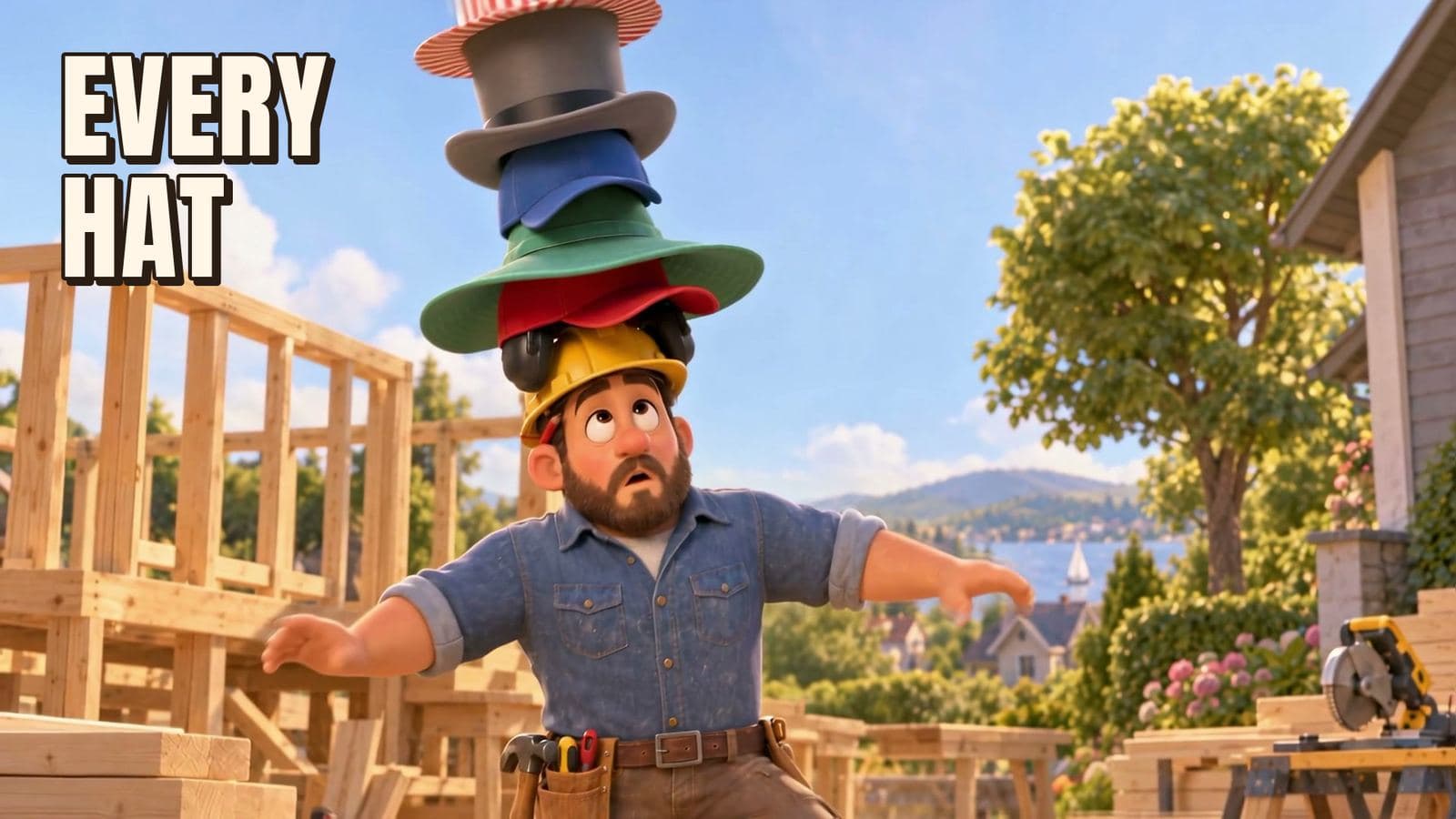
You open up to do the thing you love. That is one hat.
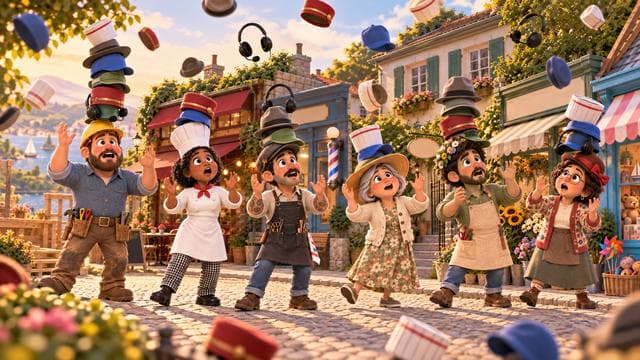
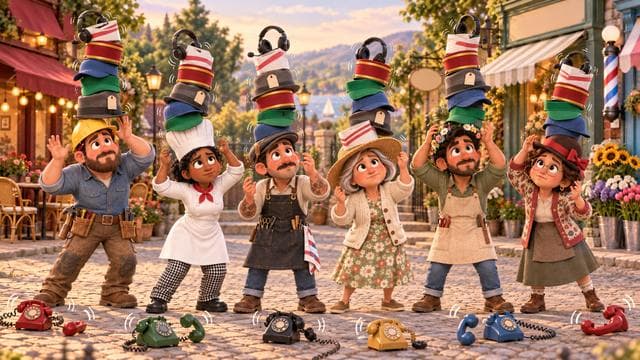
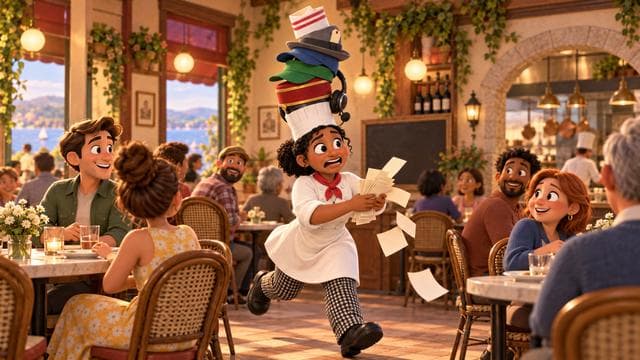
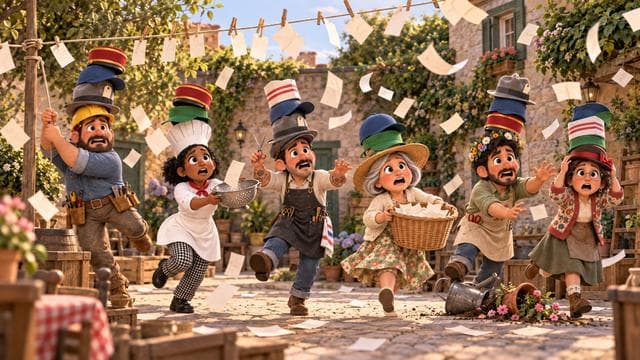
Then the phone rings. Now you also sell, chase orders, and answer the same questions from the window to the door. Each job is one more hat on the stack, and the one you opened up for is at the bottom of the tower.
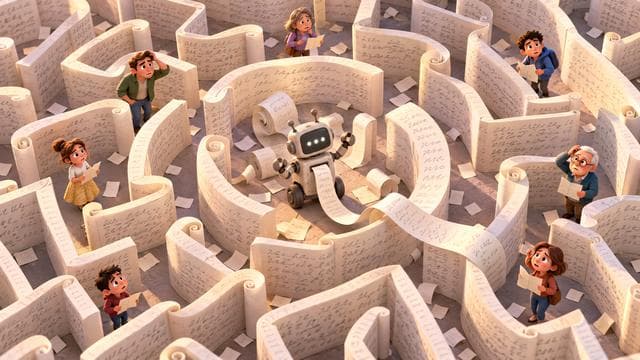
So you get a bot. It buries your customers in walls of text. They close the tab and call you anyway.
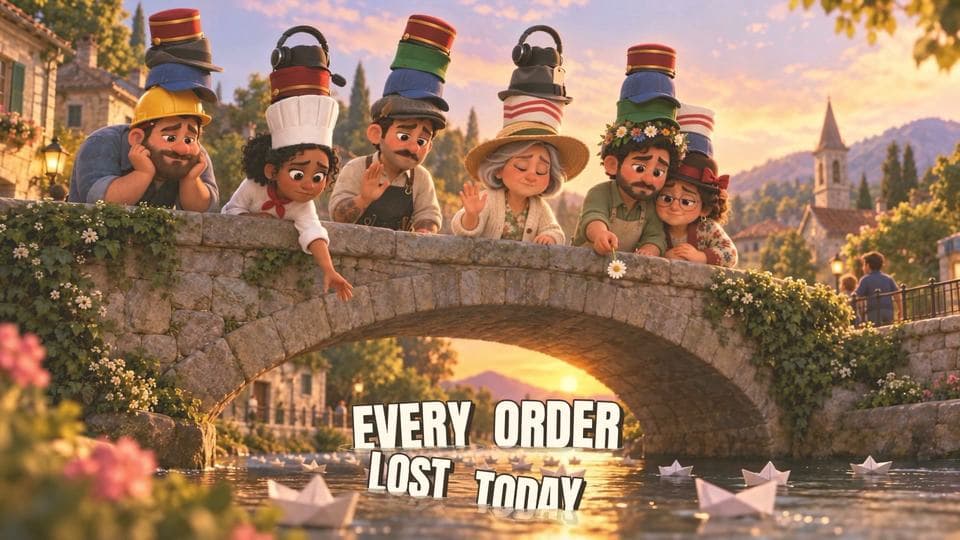
Every hat, we wear 'em all.Every question, every call.Every click that walks away,every order lost today.
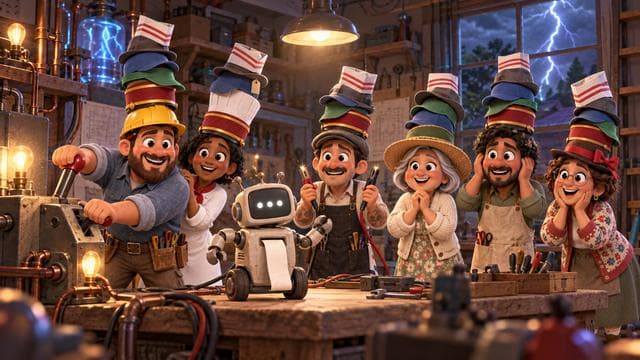
The song stays with that feeling for its first 80 seconds. Then each owner writes one message, who we are and what we sell, and the hats fly off to little white helpers. The helpers are the film's picture of an agentic application. They wear every other hat, your way, and you keep the one you love.
A click is a paper plane
Nobody feels a bounce rate. So in the problem half of the song, nothing is a screen. Every line had to become something you can hold, chase or lose.
| The line | The literal version | What you see |
|---|---|---|
| "Every click that walks away" | A bounce rate chart | Paper planes wait at a tiny airport by the shop doors. Nobody comes. They take off again, and the six run in too late. |
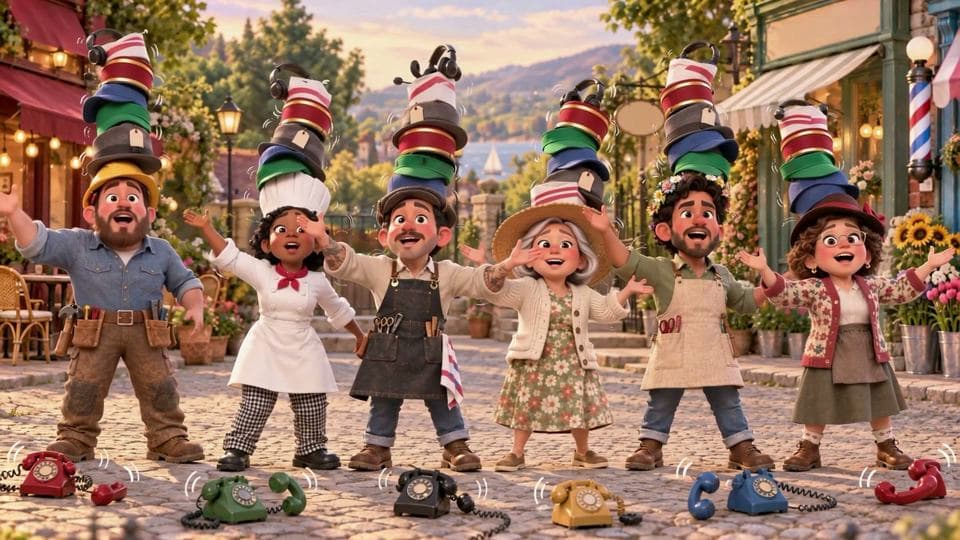
| "Every question, every call" | A full inbox | Speech-bubble balloons lift the six off the ground, ringing phones dangling from the strings. |
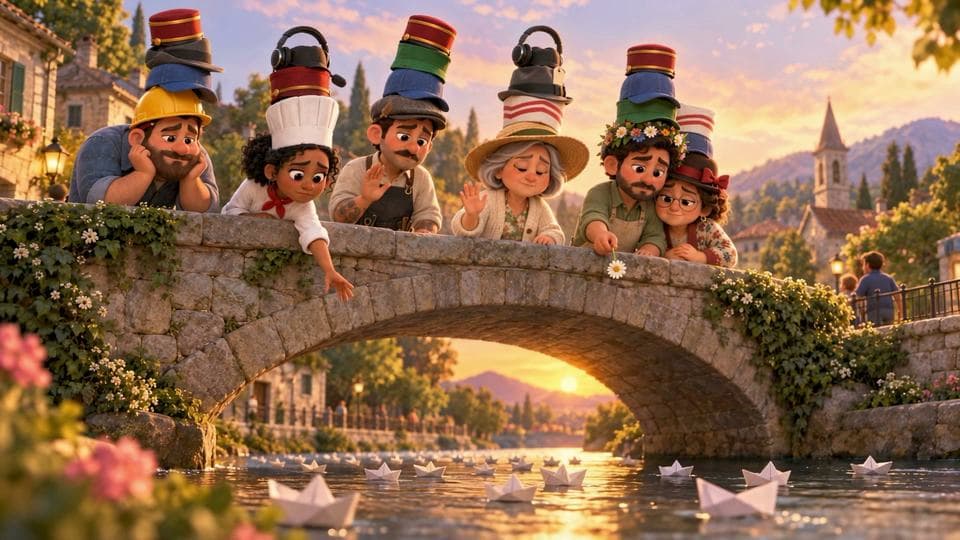
| "every order lost today" | An abandoned cart | A gust blows the order slips off a washing line. In the second chorus they float away down a river as paper boats. |
| "It buried them in walls of text" | A long chat window | A maze built from printed paper, tiny customers lost inside, the bot at the centre still printing. |
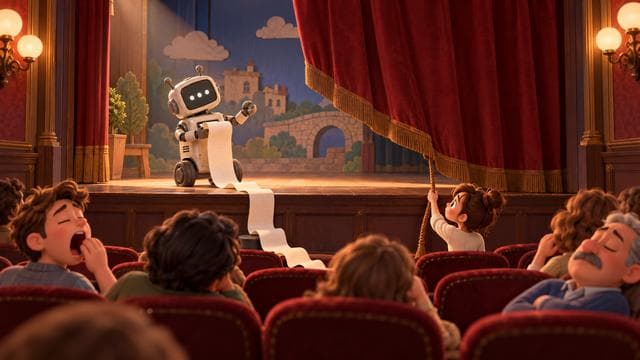
| "They scrolled, they sighed, they closed the tab" | A browser tab closing | A small theatre. The bot reads an endless scroll on stage, the audience yawns, and a customer pulls the curtain rope. |
| "We couldn't clone ourselves" | A hiring plan | Three slightly off copies of the barber tumble out of an old copy machine. |
| "So we wrote one message" | A prompt box | Each owner on their own roof, writing one note by lantern light. Six notes rise into the night. |
The cast came first
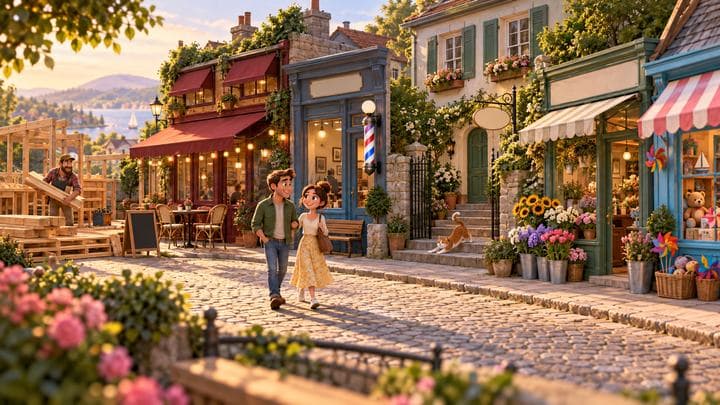
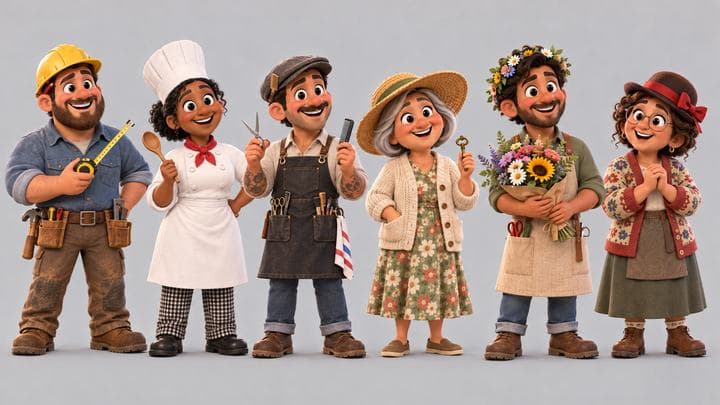
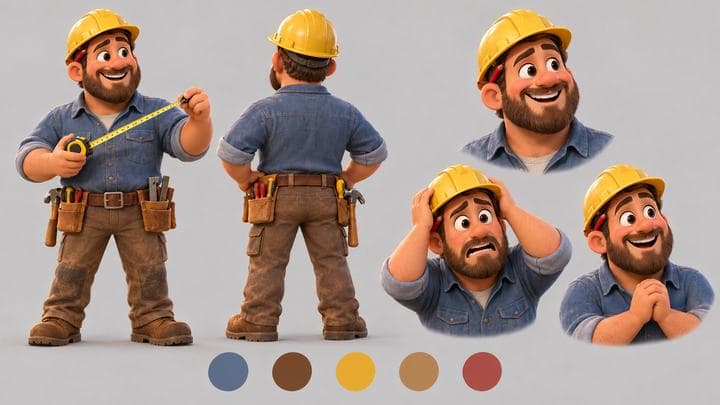
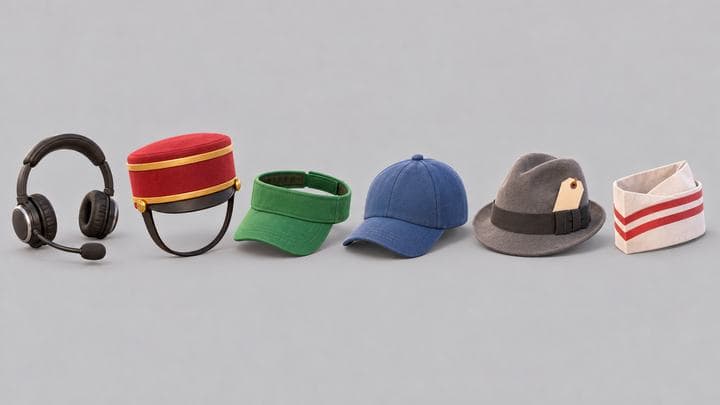
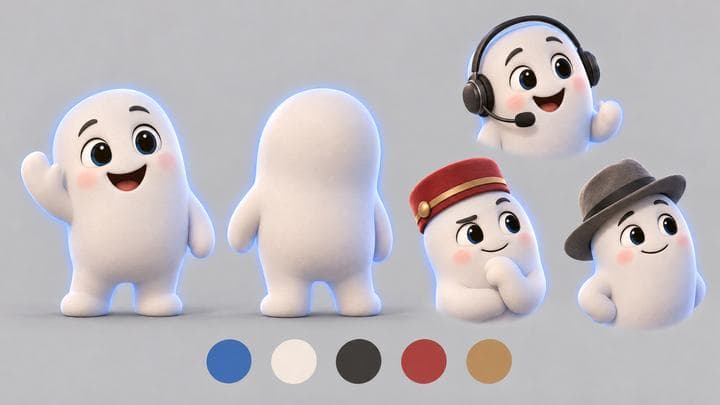
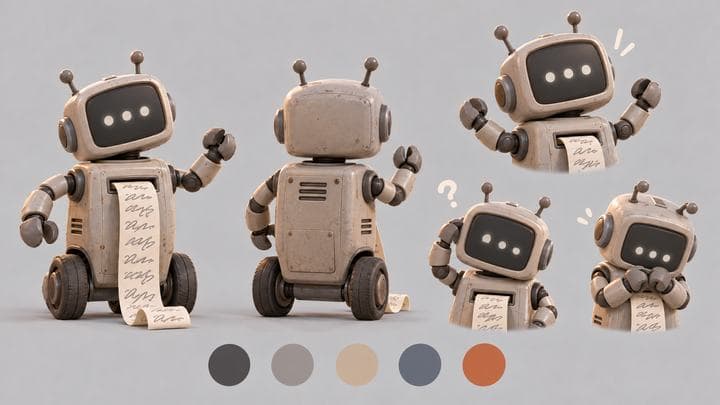
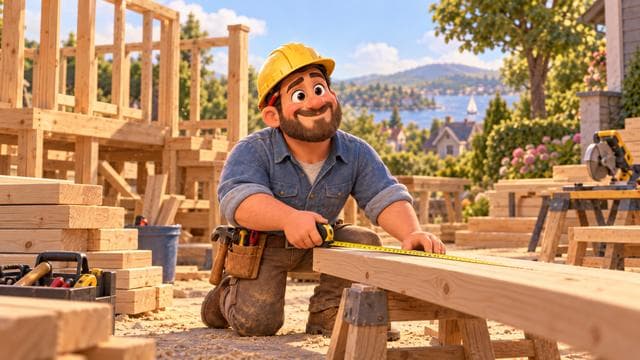
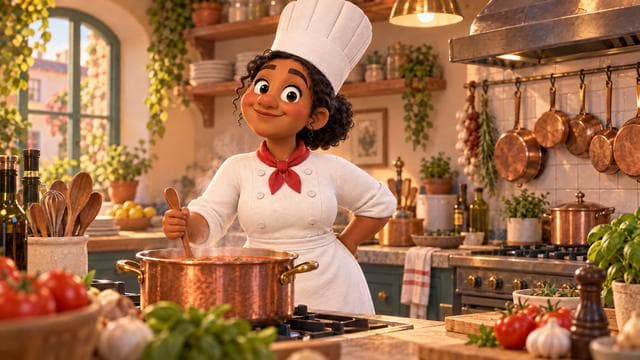
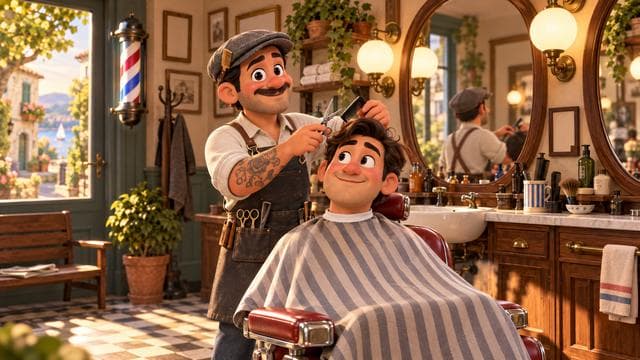
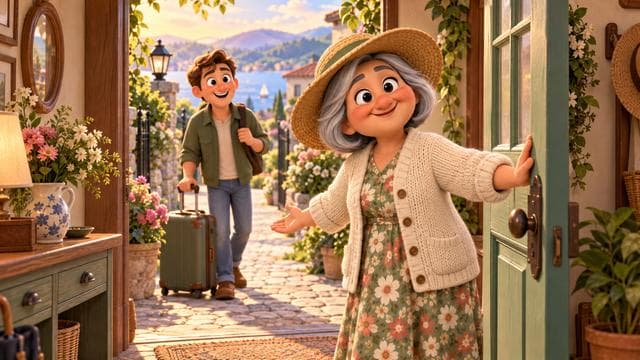
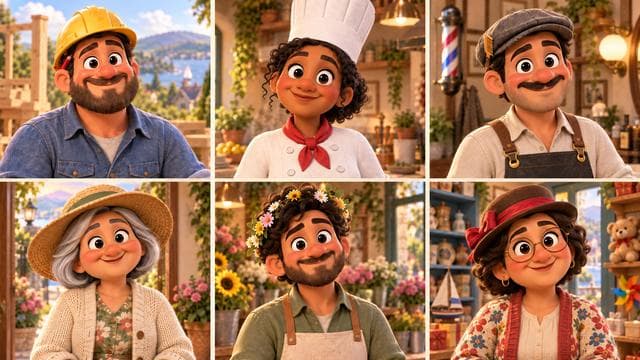
One style frame set the look. Then every character got a sheet: front, back, three expressions and a palette. A line-up handled the group shots, and separate sheets held the six job hats, the helper and the old bot. Each still was generated with the sheets it needed attached, so the builder in the last shot is still the builder from the first.
Every shot was a still first
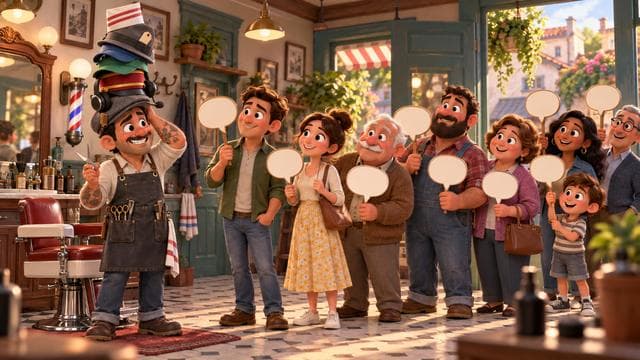
Before any motion, the whole film existed as frames, each one approved and checked at full size. A still sets the acting: what a character is doing in the first frame is what they will do in the clip. Every sign, card and tag was generated blank, because the words come last.
Two rules came out of reviewing them.
Every shot hands off to the next. The clicks leave the little airport in the first chorus, migrate away in a V in the second, come home in a V in the finale, and one lands on the planner. A film is a chain, not a postcard for each line of the lyric.
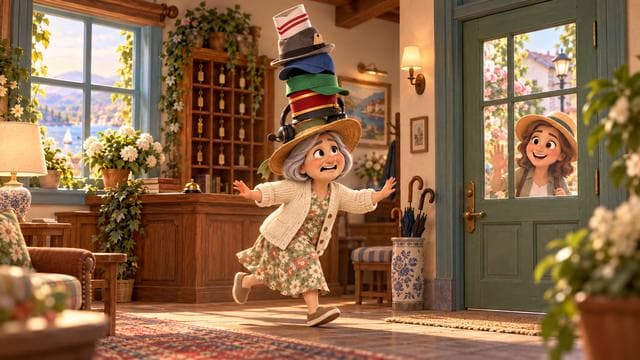
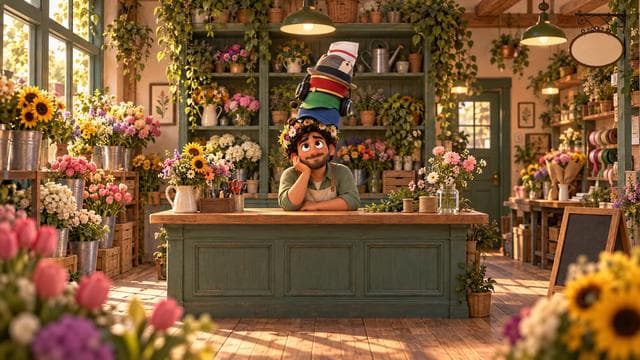
Group shots are never uniform. Six people doing the same move is boring. Each owner reacts in their own way, at their own height, true to who they are.
Here is the film, frame by frame.
The cold open
Verse 1
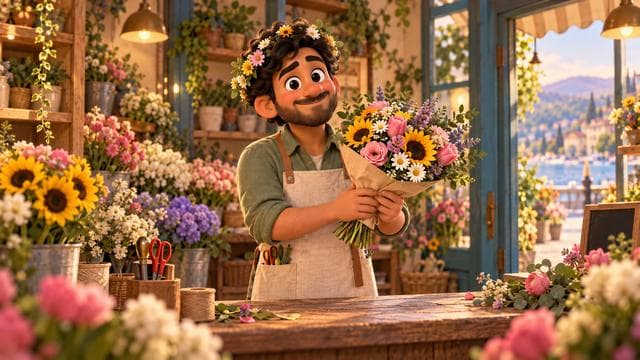
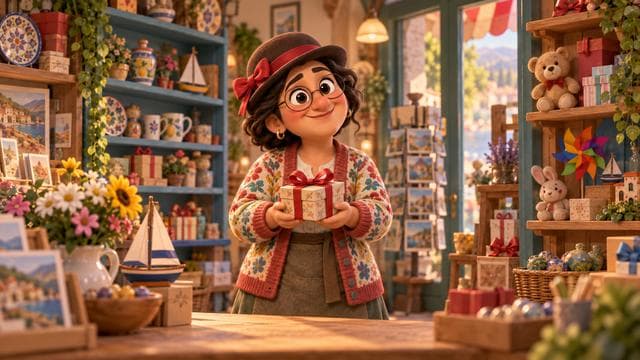
The overload
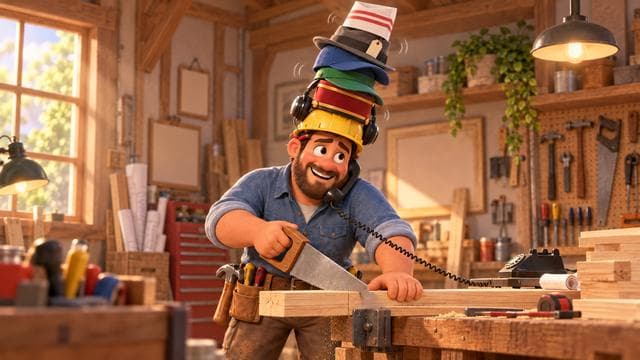
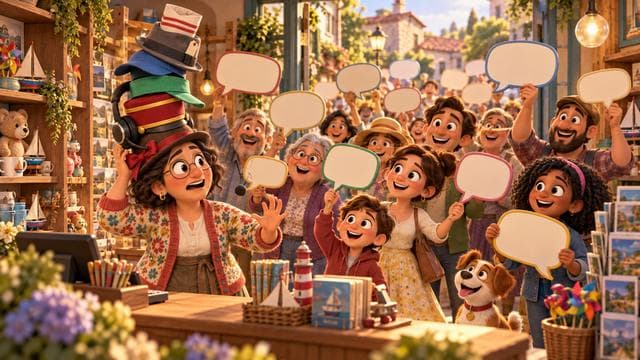
Chorus
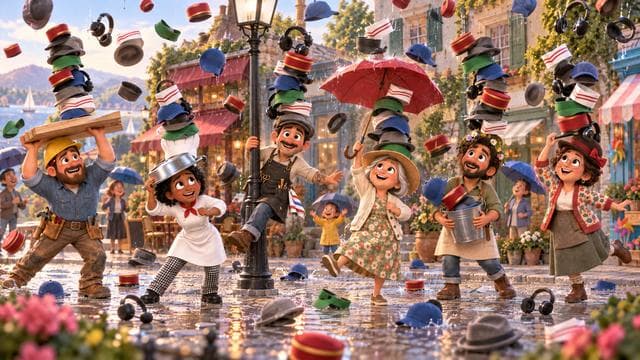
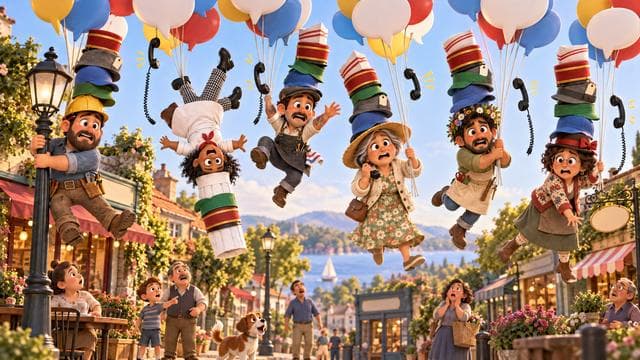
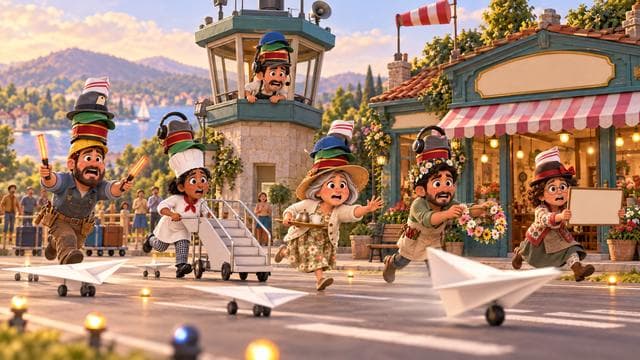
The bot
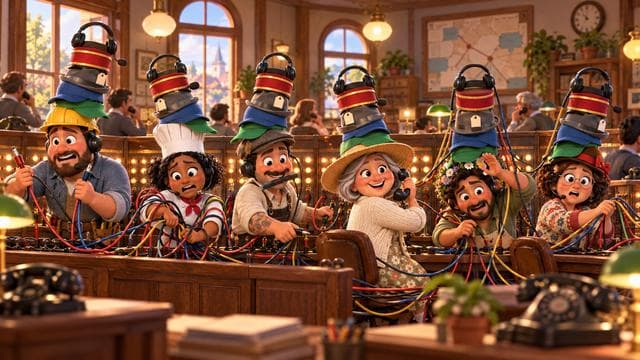
Chorus, worse
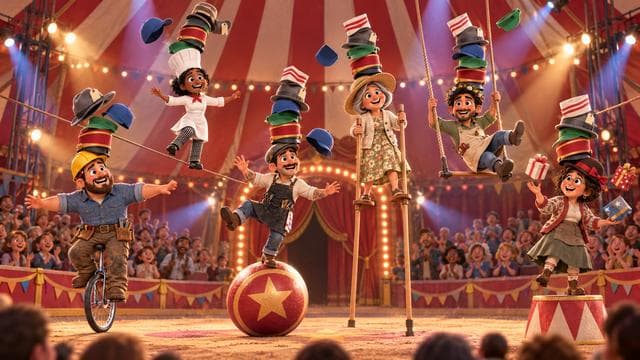
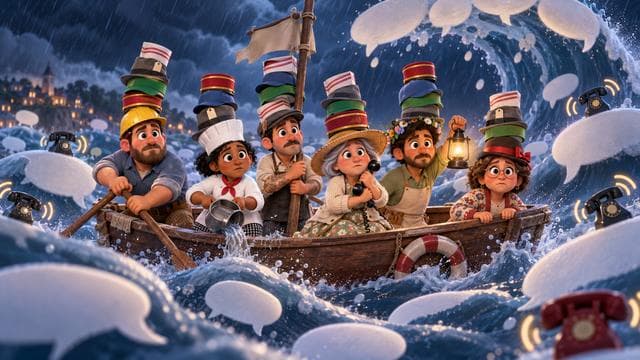
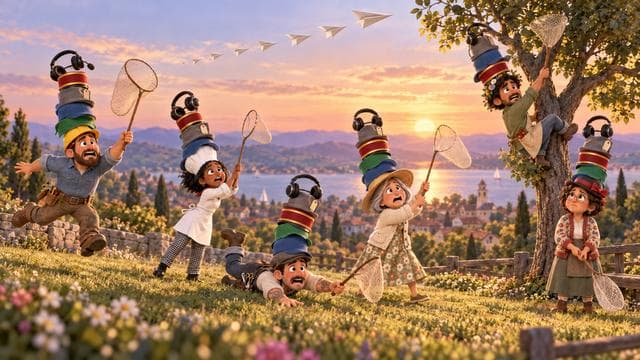
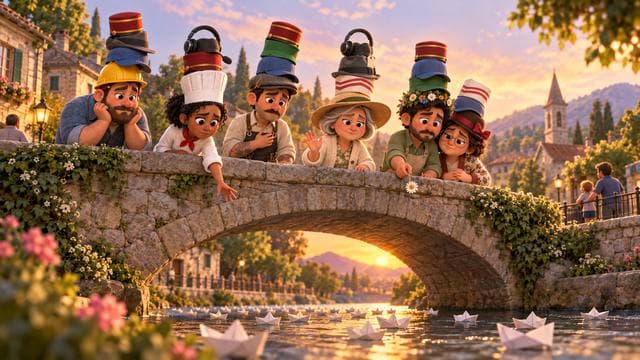
The turn
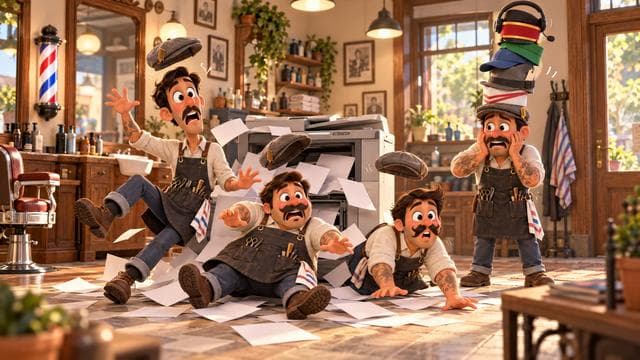
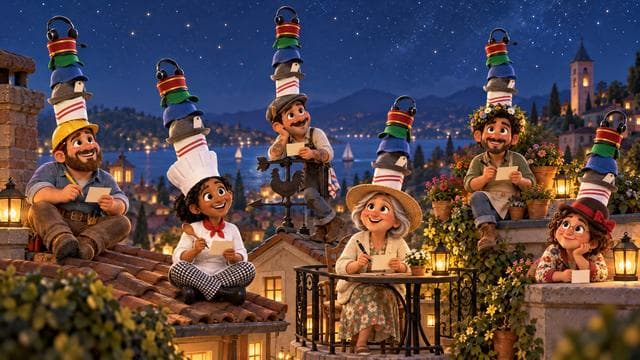

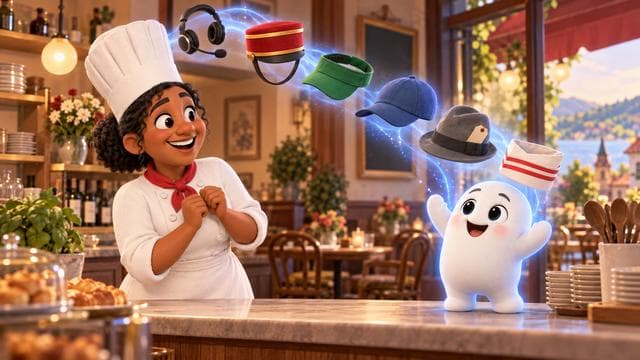
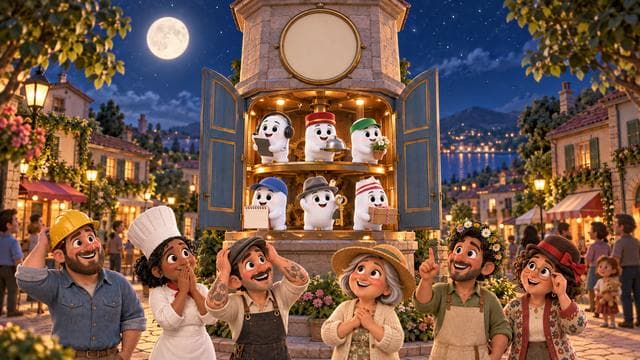
The question and the answer
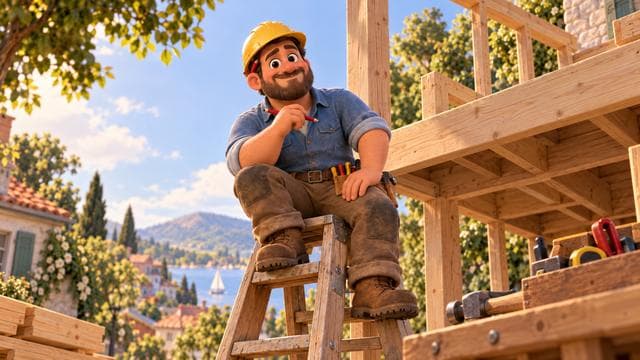
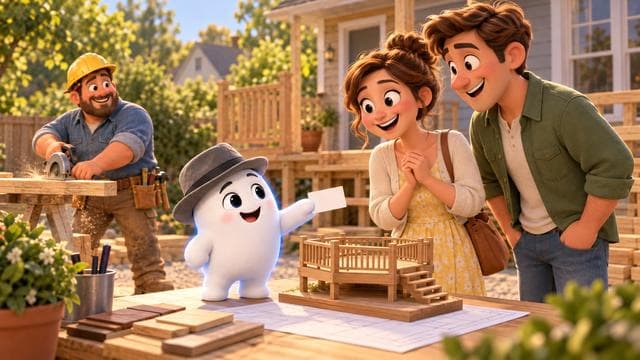
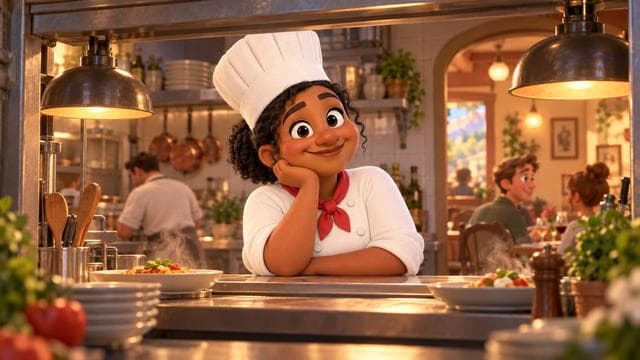
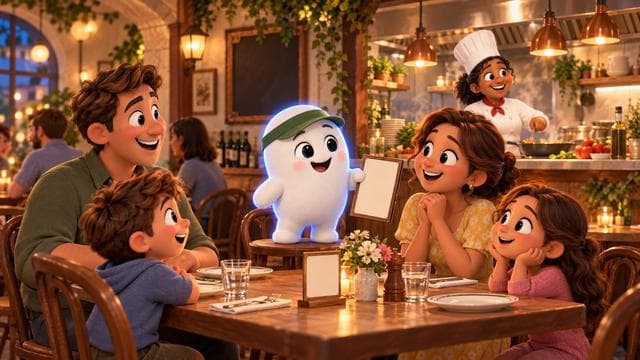
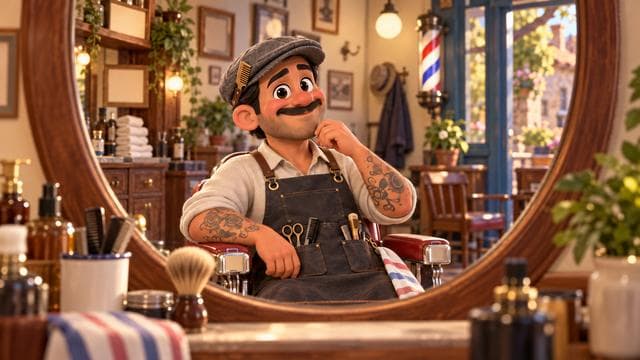
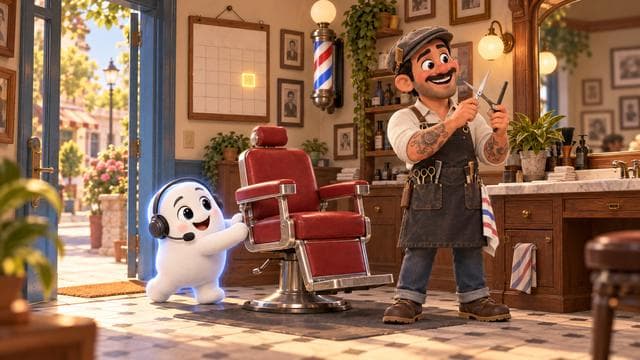

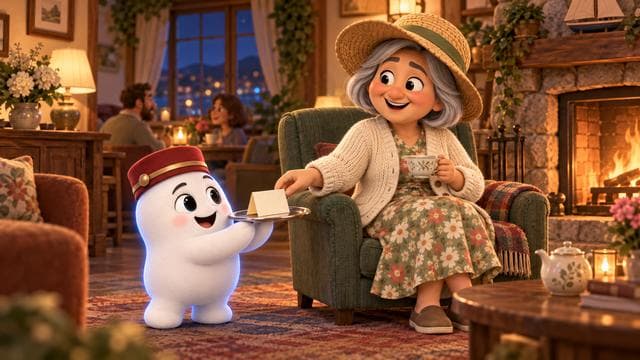
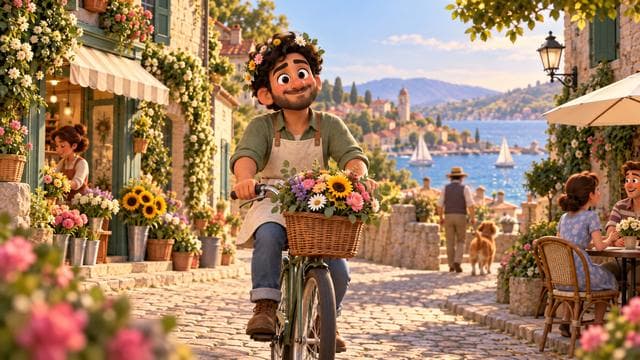
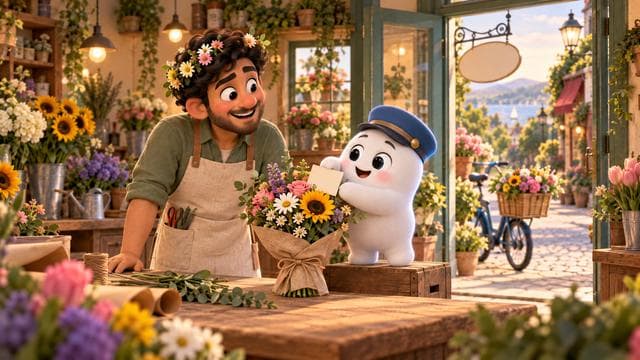
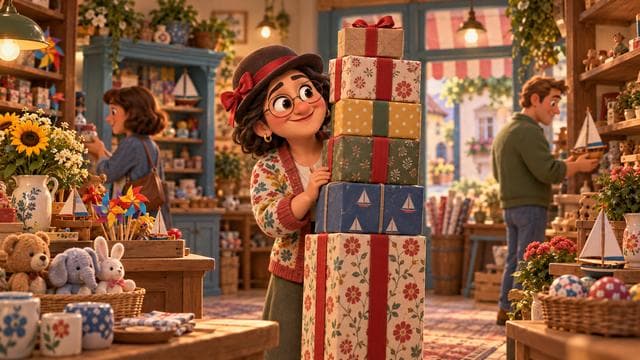
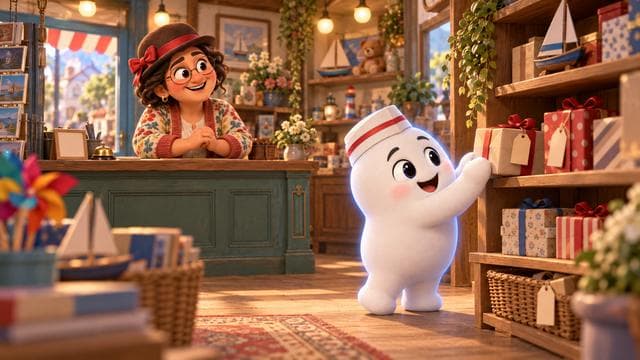
The finale
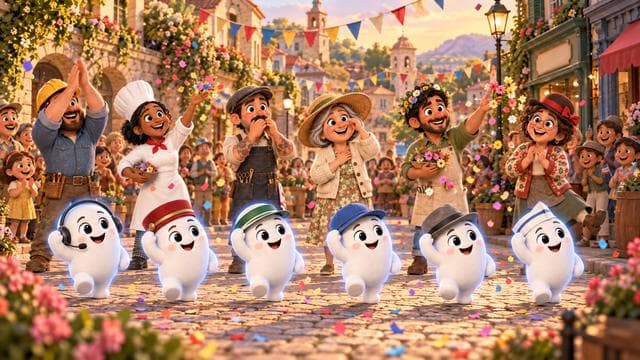
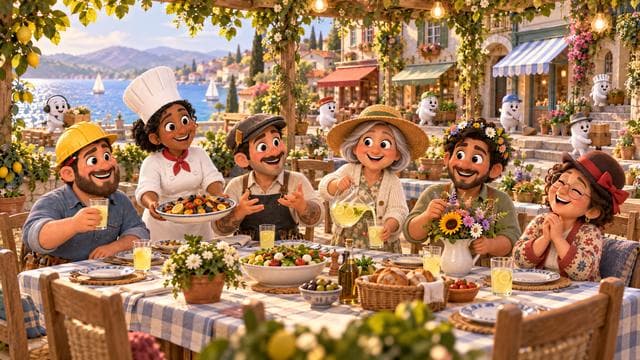
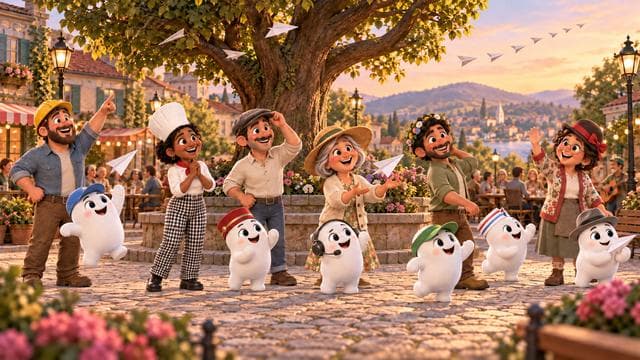

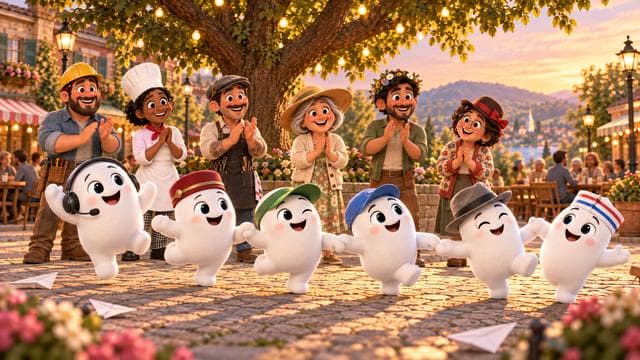
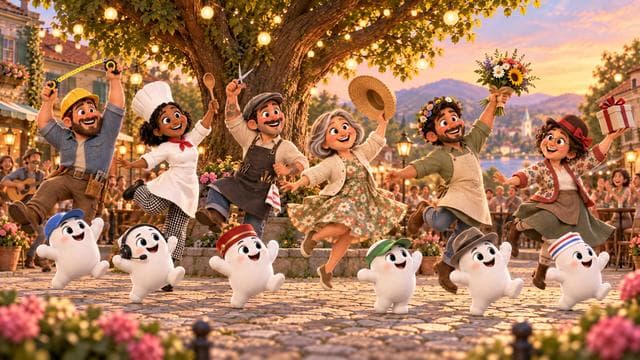
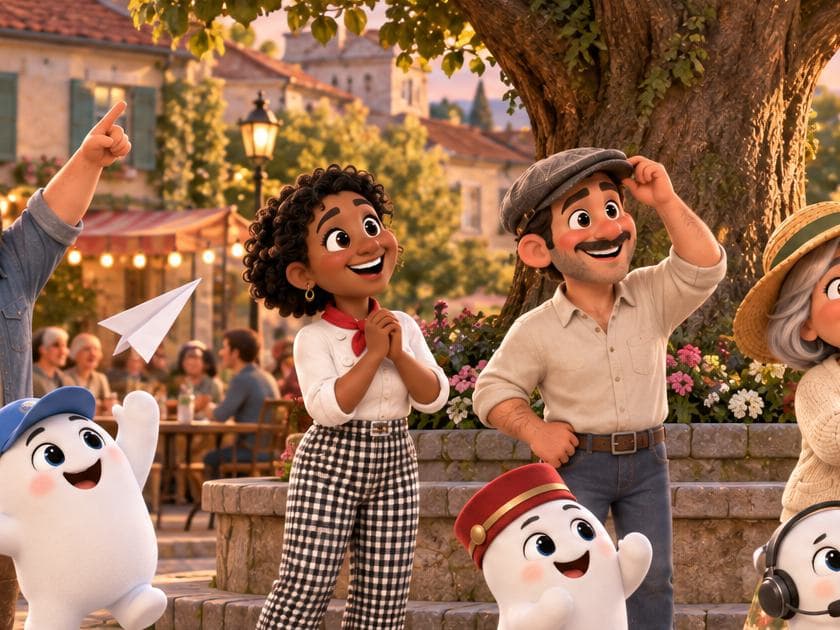
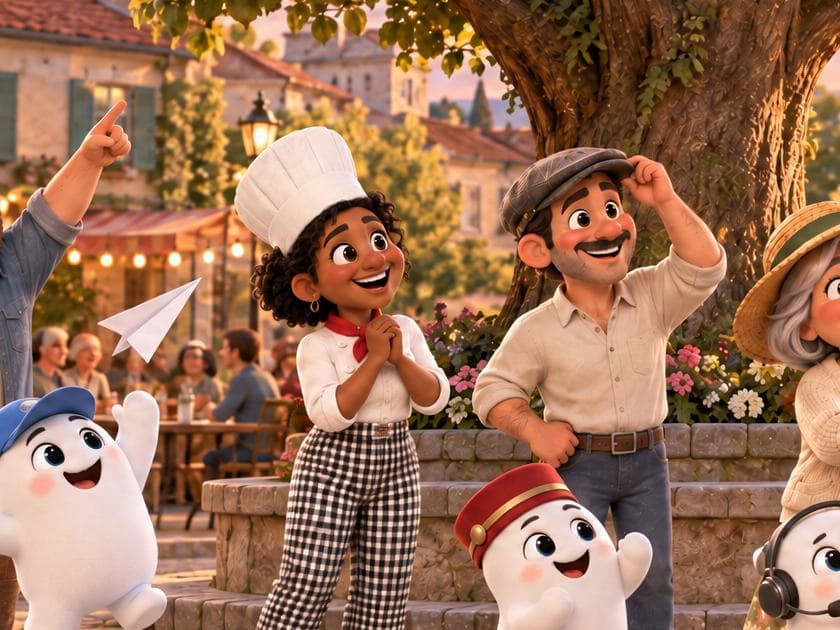
Checked at full size, fixed in the same frame
In the first town square still, the cook had lost the toque. A new generation would have changed everything else too, so we edited that frame with the cook's sheet attached and one instruction: change only the toque.
Ten steps
- One situation everyone knows. You opened up for one thing, and now you wear every hat. We tried four other stories, and came back to this one.
- The words, in drafts. Ten drafts. The version that worked gives each owner one short line of their own ("I opened up to cut hair.") and everyone a chorus they can sing back.
- The song in Suno. Voices pass from owner to owner, male and female, and the group takes the chorus. The song then plays whole, from the first note to the last. The picture fits the music, never the other way round.
- Map every word. We separated the vocal with Demucs and read each sung word's start off it. Automatic lyric timings ran up to half a second off, which is a lot when a word has to land on a frame.
- The look and the cast. A style frame, then a sheet for every character, attached to every still.
- A still for every shot. 49 in the first pass, with the story rules above. Fix by editing the same frame.
- A rough cut from stills. The whole song, cut from stills with one gentle camera move each, with notes by timestamp until the story and the timing worked.
- Motion, one job per clip. Seedance for action, one simple move at a time. LTX for singers, fed only that singer's line with a little silence first. Each prompt says in clip seconds when things happen, and then the edit speeds or slows each part of the clip to land on the music. Only the picture is ever retimed. Then one upscale to 1080p for the 720p takes.
- Words last, in code. We rendered the edit clean and drew every word and graphic on top, in a kinetic typography engine: one Claude Code agent per section of the song, all working from one style guide, with a lead for the whole film.
- Watch it all, fix by timestamp. Full renders, automatic checks for audio sync, freezes and black frames, and a frame-by-frame comparison with the last version to prove that only the intended shots changed. Then a person watched it. 40 versions.
The stack
| Tool | Its job |
|---|---|
| Claude Code | Everything between the tools: prompts, the edit, the graphics, tracking and checks |
| Suno | The song |
| Demucs | The separated vocal, for timing and lip-sync |
| GPT Image 2.5 | Character sheets and stills |
| Seedance 2.5, image to video | 37 shots: action and camera moves |
| LTX-2.5 Pro, audio to video | 13 shots: singing |
| Sync-3 | 1 shot: the builder's line |
| Gemini | 1 shot: the paper plane landing on the planner |
| Topaz Proteus | The upscale to 1080p |
| HyperFrames | The edit, from the stills-only cut onward |
| Scenario's kinetic music video skill | The engine for the words and graphics (three.js and Canvas2D) |
| Apple Vision | Cut-outs, so words can sit behind people |
| OpenCV | Tracking words onto signs, cards, menus and tags |
| Runware | Where we ran the image and video models |
Every word, drawn last
No word in this film was generated into the footage. Each one was drawn in code, on top of a clean picture, by a few rules.
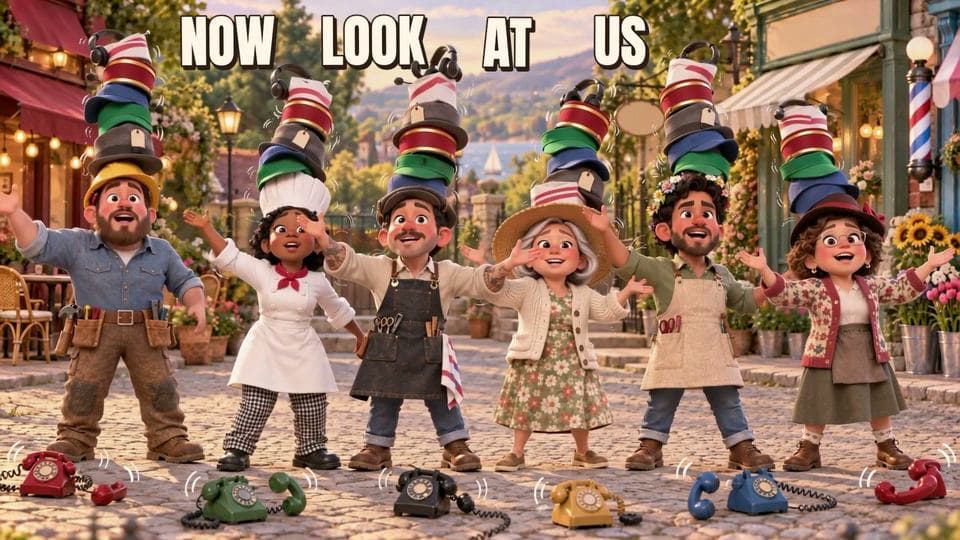
One lettering per world. Stencil for the builder, chalk for the cook, gold leaf for the barber, brass for the host, green ink for the florist, ribbon script for the shop owner. The helpers get one clean white style with a blue glow, so you know who is talking from the type alone.
A word sits on something. A sign, a tag, the sky over a roof. Never over a face. Key words finish on, or just before, their sung syllable.
Behind the people
The words sit behind the hat towers, through a cut-out of the six made for every frame. The cut-out dropped whole people when six filled the frame, so we made one for each half of the picture and joined them.
On the signs
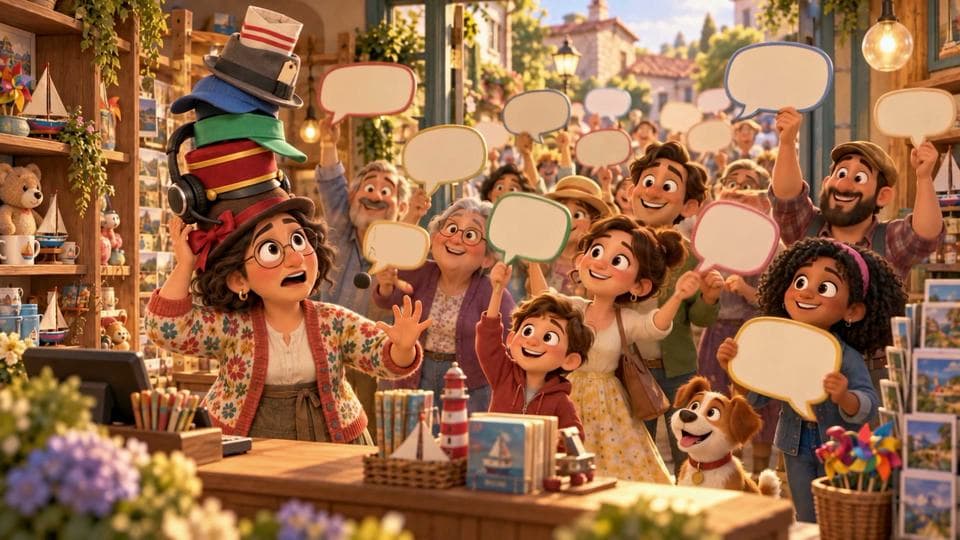
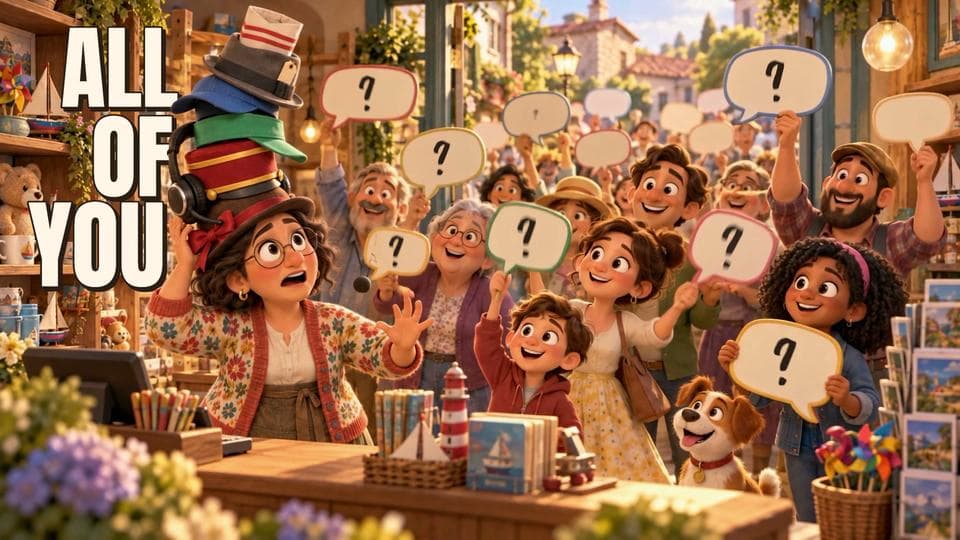
The crowd bounces, so the signs jump about 40 pixels in a frame or two. Any tracker that smooths would leave the "?" behind. So each sign is matched in every frame against one fixed picture of itself, and nothing is smoothed.
On the paper
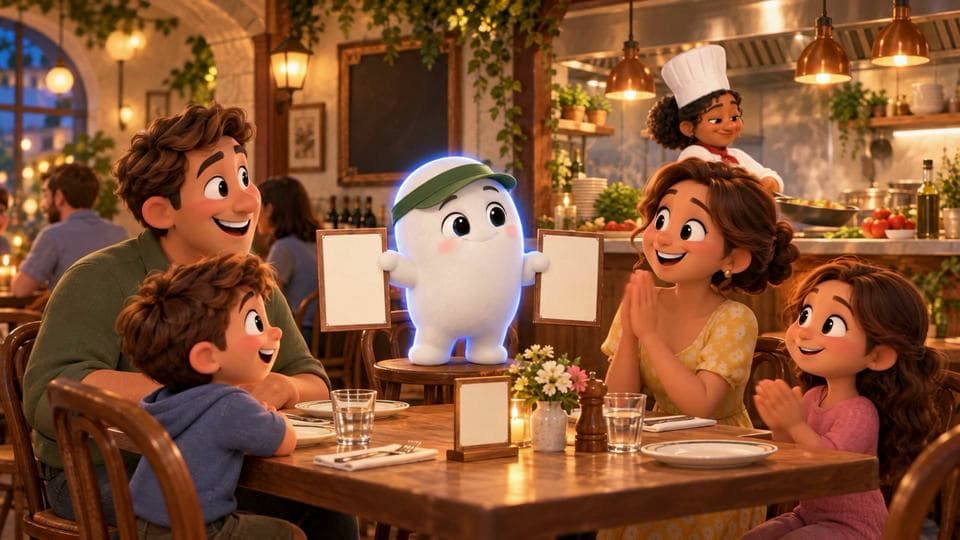
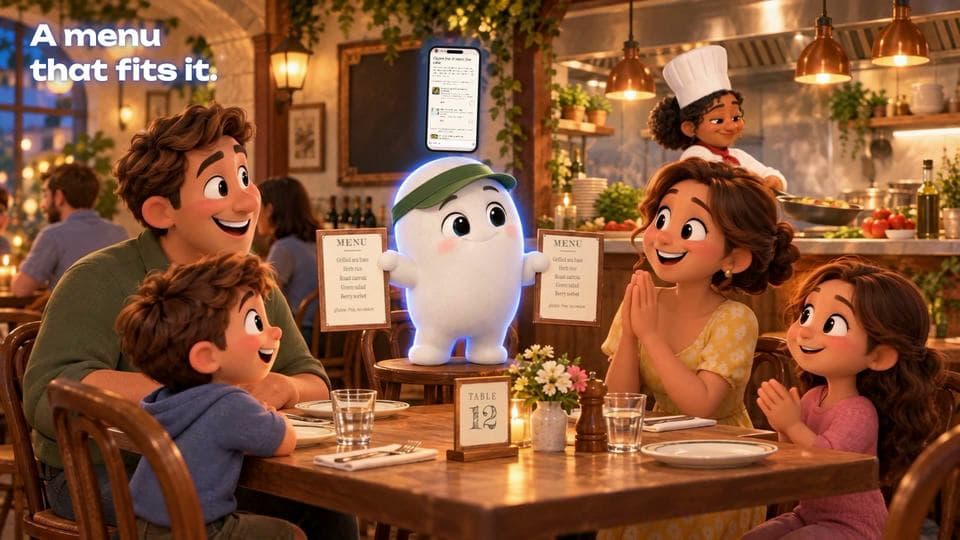
Sharp type on a 3D prop looks pasted on. The menus, the table number, the concierge's note and the gift tag are in soft ink: never pure black, with a hair of blur and specks of missing ink. Above each card floats a small phone with the real app's whole screen.
In the river
In the second chorus, the line drops off the bridge and sinks behind the paper boats, a word at a time.
What we got wrong
- All the hats in one tower. We asked for six owners and their hats, and the model gathered every hat into one tower. Spell out the count and the place: six towers, one on each head, no hats anywhere else.
- Smiling through the storm. Everyone grinned through a storm at sea, and through every order they lost. Name the emotion in the prompt, and say who does not smile.
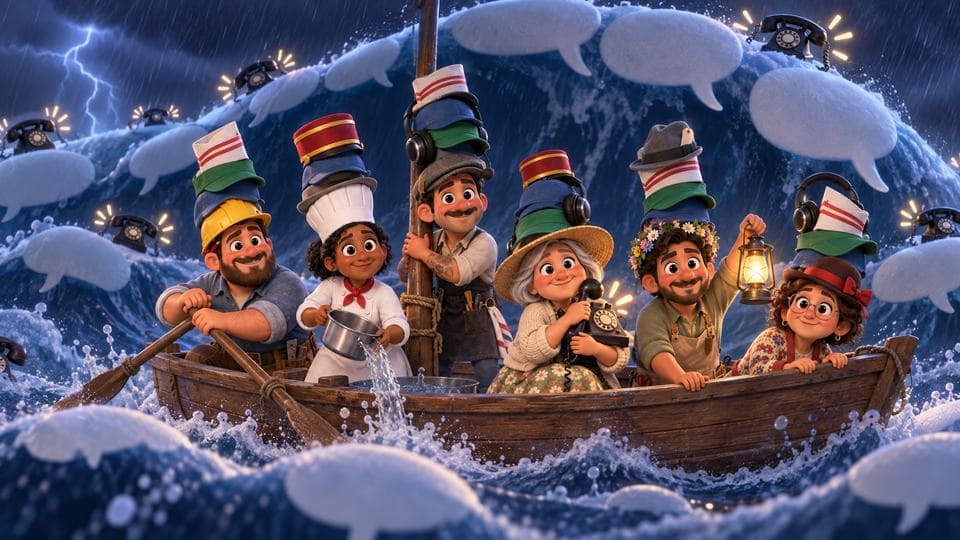
First try 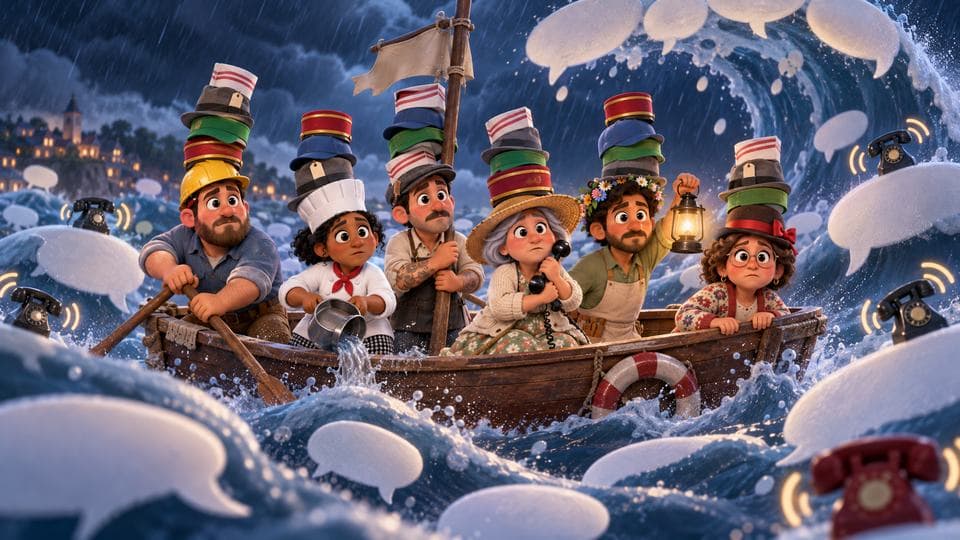
With the emotion spelled out - A spoon stole the line. The cook tasted from the spoon instead of singing, because the still had the spoon raised. The still sets the acting. Free the mouth before you animate a singer.
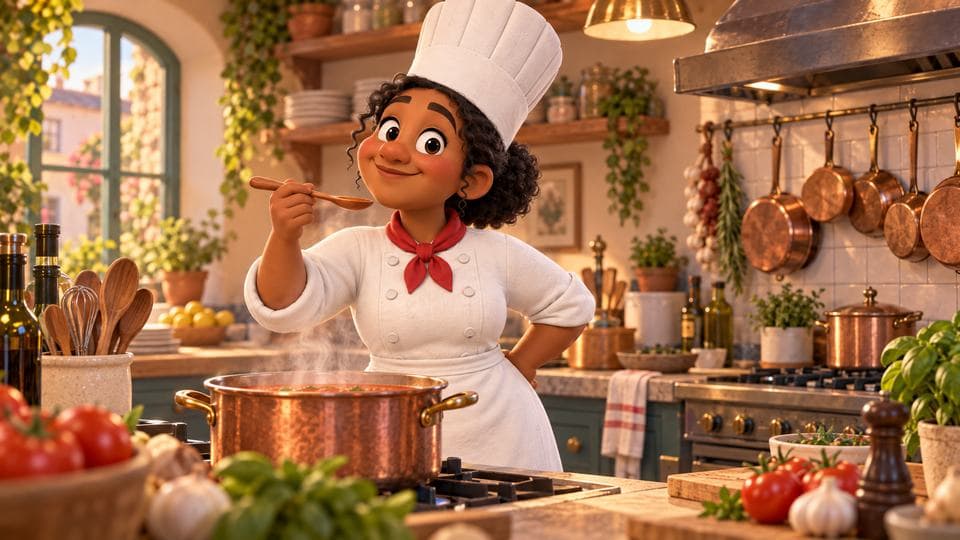
First still 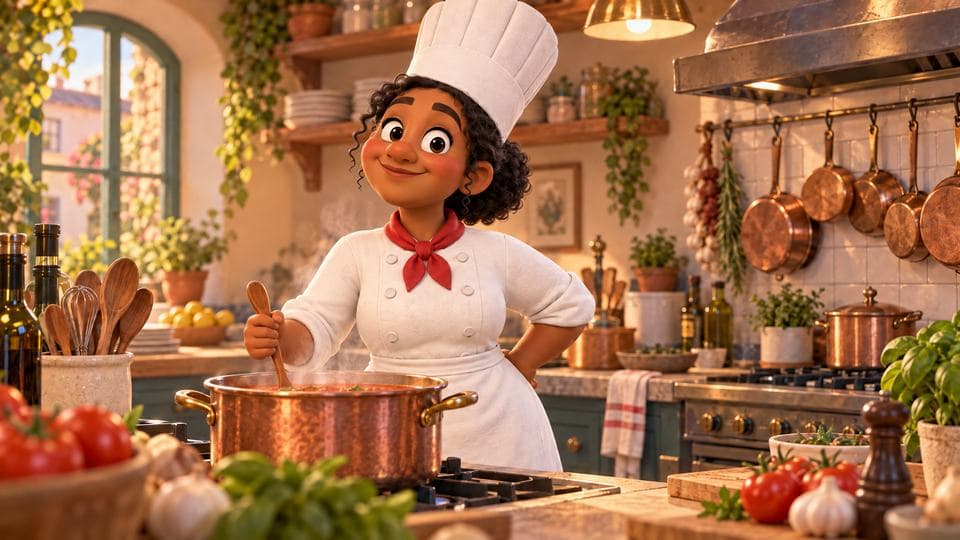
Edited, spoon in the pot - Smoke from nowhere. The singing model filled quiet rooms with steam, haze and passers-by, including a white puff beside the barber's ear. We had checked the mouths and missed it. Check the background and every edge at full size, and describe the clear, still room in the prompt.
- Lip-sync on everyone. A lip-sync pass saved one shot, the builder's. On the others it gave toothy grins, and on the group it smeared a face. Keep a fix for the shot that needs it.
- Starting low. We tried one take at 480p with an upscale. The shop owner's round glasses were gone from the first frame, and no upscaler can return what the take never had. That take is still in the film: look at the circus. Generate at the size that keeps the details, then upscale once.
- A prop that changes shape. We asked for paper planes that land and unfold into booking cards. They multiplied into a pile of duplicates. Two more takes on two other models later, it became one plane landing on one planner, with BOOKED stamped in code. Never ask a video model to turn one thing into another. Keep the thing simple and draw the change yourself.
- A counter we loved. We built a running hat counter in the corner, with a whole arc from one hat to seven and back. It took a corner of every scene and told you nothing the towers did not, so it came out. A device you admire in another film has to earn its place in yours.
- Hiding the product until the end. The real app first appeared as big cards in verse 3. We did not like them there, so we cut them. Then a viewer told us the solution was not clear until the last seconds, and they were right. The fix was smaller, not bigger: a tiny floating phone over each card, and our logo in the sky as the camera rises. Say what it is before the last chorus.
- A logo that shook. Pinned to a track of the sky, it shook. The footage is 24 frames a second shown at 30, so every fifth frame repeats and the stars stop for a moment, while our logo kept moving. We tracked eight real stars and moved it on the footage's own clock. Anything pinned to a shot runs on that shot's clock.
Make your own
Everything we used is named above. Start with one situation and one song, and the rest follows from there.
Credits
Directed by Lev Kaplun. Words drafted with Claude and edited by Lev Kaplun. Song made with Suno. Stills, motion, edit and graphics made with Claude Code.
The six apps in the film are live. Open one and ask it something.
- BrandeckThe builder
- BrandoriaThe cook
- BarbranderThe barber
- Brand & BreakfastThe host
- BrandeliaThe florist
- BrandazaarThe shop owner
Build agentic applications, in minutes.
Start on BranderUXInspiration: They Hired Me, by Team0.